

Orange County
Structural plansfor your home addition.
Add a room or a second story with foundation and framing plans that connect the new space to your home.
Service scope
What the addition design covers
The design must work for both the new space and the affected parts of the home.
- 01Existing framing and foundations where the addition connects
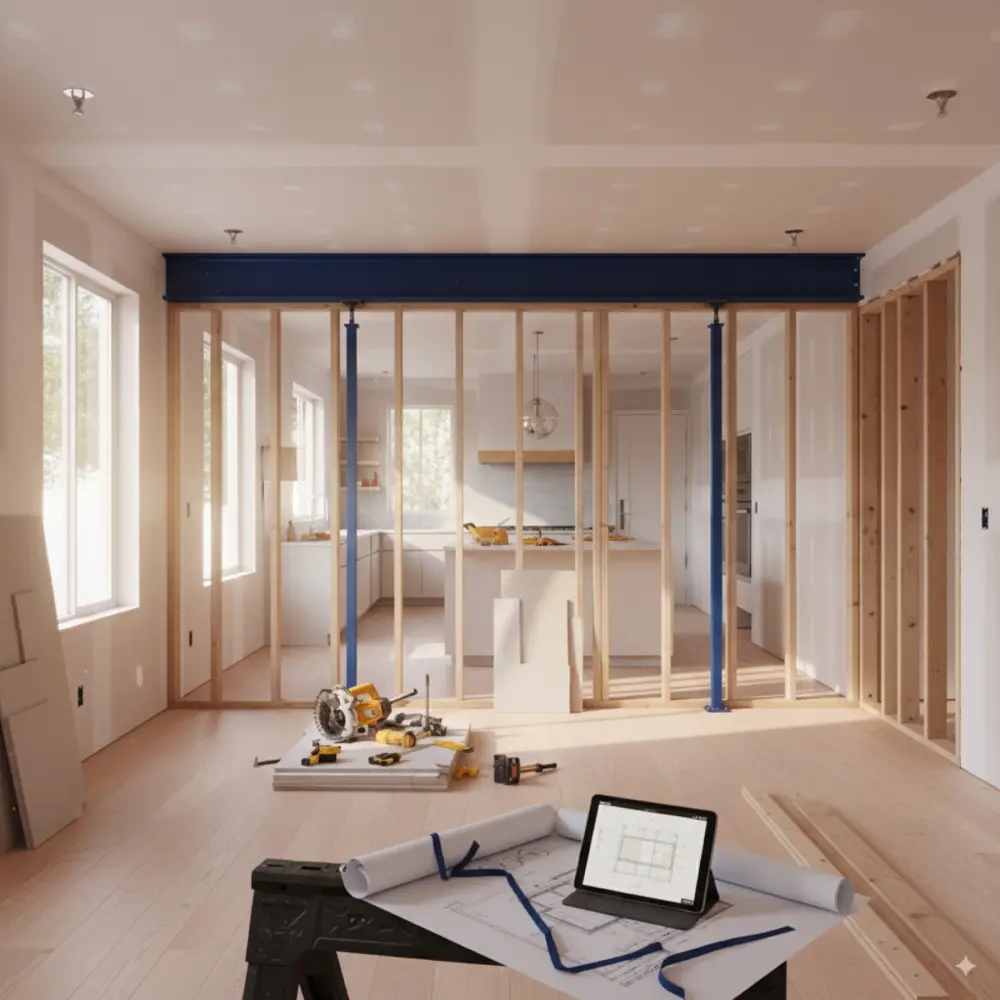
- 02New foundation, floor, wall, beam, header, and roof framing
- 03Connections and transitions between existing and new construction
- 04Gravity and seismic forces from the roof down to the foundation

Project deliverables
Deliverables matched to your project
We identify missing survey, soils, or field information before relying on it.
- Structural calculations based on the confirmed design inputs
- Foundation, floor, wall, and roof framing plans as applicable
- Beam, post, shear, holdown, and connection details as required
- Verification notes, plan-review responses, and construction clarifications when included
A clear path forward
Plan the tie-in before breaking ground

01 Step
Share the addition concept
Send plans, surveys, photos, available records, and the space you want to add.
02 Step
Design old and new together
We develop the foundation, framing, and connections around the agreed layout.
03 Step
Use the completed documents
Take the agreed package into agency review, contractor pricing, and construction.
Resolve where the addition meets the house
The biggest structural questions often occur at the transition between old and new.
- Review of the capacity and condition of affected existing elements
- Clear roof, floor, wall, and foundation transitions
- Structural options that protect the intended layout
- Early identification of needed soils, survey, or field information
Client experience
What clients say
“Their quality of work and customer service is excellent.”
“They were very responsive, helped me salvage what I could from the previous firm, and provided the expertise and knowledge needed to finish the job quickly and efficiently.”

Questions
Frequently asked questions.
What information is needed to engineer an addition?
Existing and proposed plans, a site plan or survey when available, photos, known foundation information, and the architectural goals are useful starting inputs. Additional field verification may be needed.
Can the existing foundation support a second story?
That requires evaluation of the current foundation, framing, material assumptions, and proposed loads. The result may be reuse, strengthening, new supports, or a revised design strategy.
Do additions require soils information?
Requirements vary with site, foundation type, addition size, and jurisdiction. We identify the geotechnical information needed for the structural design.
Do you coordinate with architects and contractors?
Yes. Coordination helps align structural depth, openings, roof geometry, constructability, and the permit set.
What happens if existing construction differs from the plans?
We review documented field conditions and determine whether the design needs clarification or revision. Additional work is confirmed before proceeding.
Do I need architectural plans before structural engineering?
A concept can be enough for early structural input, but full structural documents usually rely on a coordinated architectural layout, dimensions, openings, elevations, and site information. We can identify which inputs are still needed.