
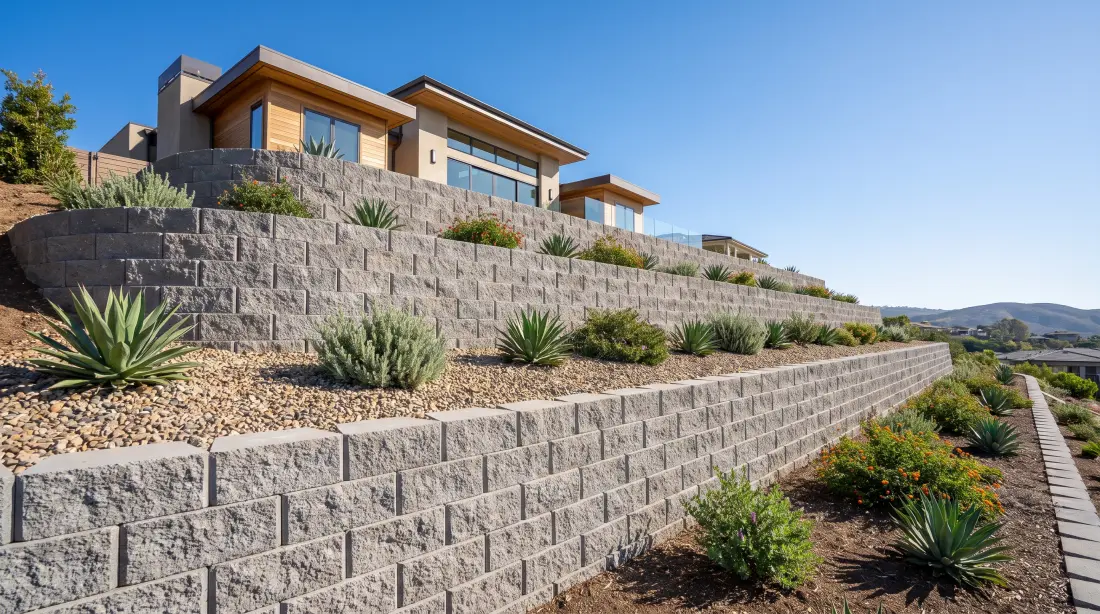
Orange County
Retaining wall inspectionsand design.
Leaning wall or a new project? Get an evaluation or design that considers your soil, drainage, and nearby structures.
Service scope
What affects the wall design
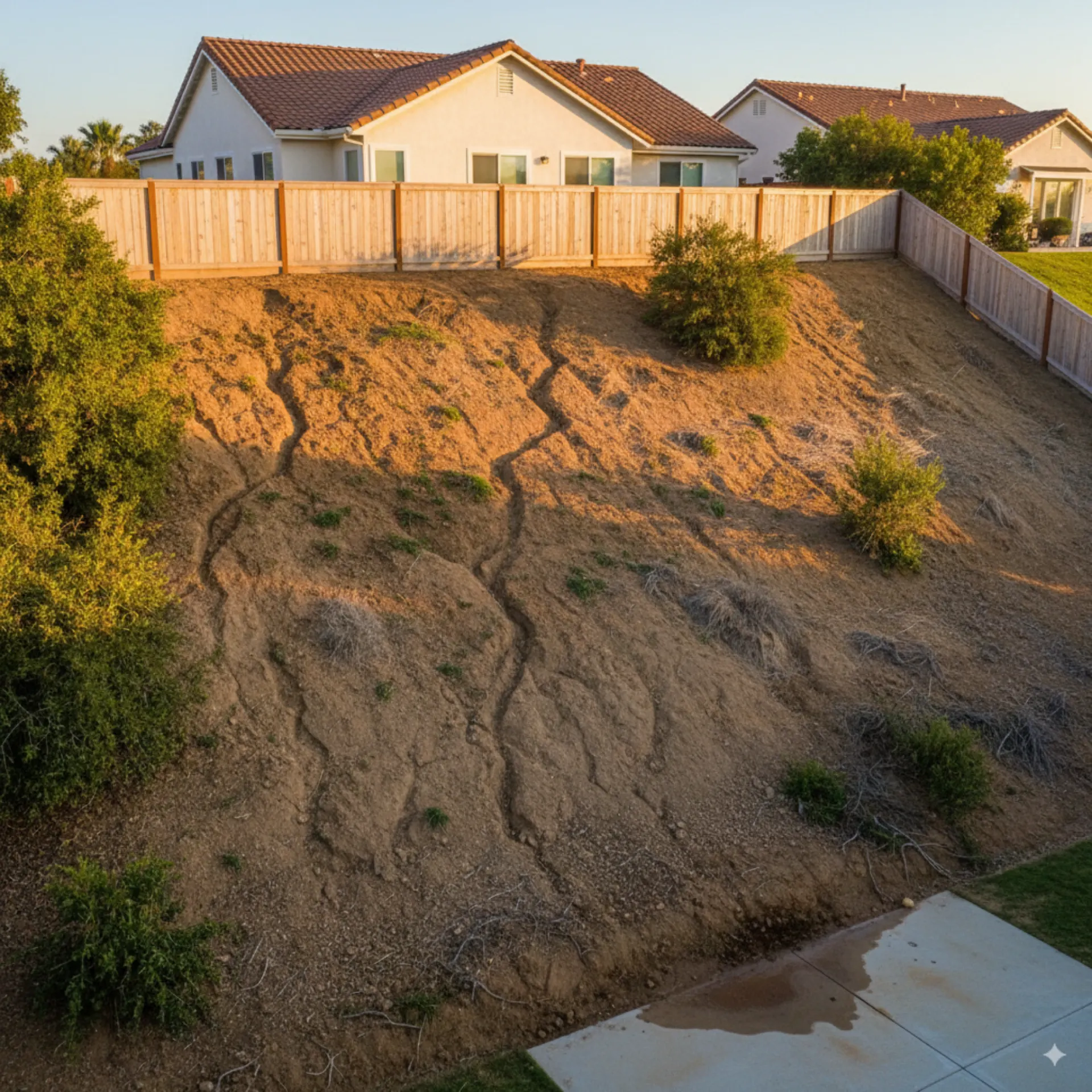
The exposed wall is only part of the problem.
- 01Wall height, layout, access, visible condition, and the grade it retains
- 02Soil and added loads from slopes, vehicles, buildings, fences, or pools
- 03Drainage assumptions and the effect of water behind the wall
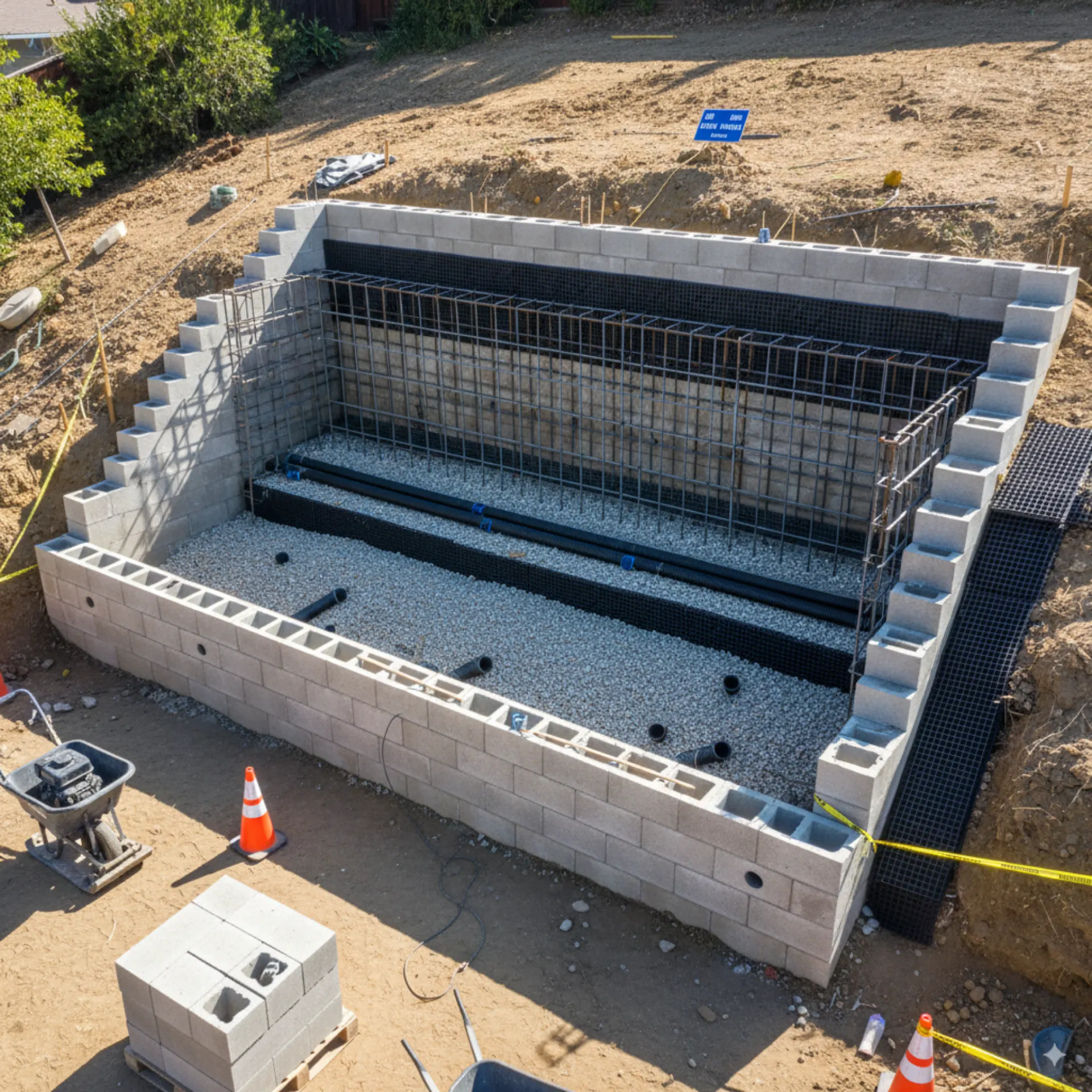
- 04Foundation, reinforcement, connections, and stability of the selected wall system
Project deliverables
A defined package for evaluation, repair, or new design
Your proposal identifies which deliverables apply to your wall and the work you need.
- Existing-condition findings or a documented basis for a new wall
- Calculations using the confirmed wall geometry, soil criteria, loads, and drainage assumptions
- Plans, sections, footing, reinforcement, and connection details as required
- Permit documents and clearly assigned consultant or contractor inputs when included
A clear path forward
Move from site concern to a wall plan

01 Step
Show us the wall and site
Share photos, dimensions, plans, surveys, soil reports, and the concern or proposed improvement.
02 Step
Confirm the information needed
We identify missing site inputs and develop the retaining-wall solution.
03 Step
Use the wall documents
Take the agreed package into permitting, contractor pricing, and construction.
Choose repair or replacement with the site in view
The right answer depends on the wall, the ground it holds, water, and nearby improvements.
- A repair-versus-replacement discussion tied to observed conditions
- Design consistent with available geotechnical recommendations
- Drainage and nearby-load assumptions stated clearly
- Details suited to site access and the selected construction system
Client experience
What clients say
“Their quality of work and customer service is excellent.”
“They were very responsive, helped me salvage what I could from the previous firm, and provided the expertise and knowledge needed to finish the job quickly and efficiently.”
Questions
Frequently asked questions.
When does a retaining wall need engineering or a permit?
Requirements depend on wall height, retained grade, nearby loads, location, and local rules. Walls supporting vehicles, buildings, slopes, or other improvements may require engineering even when relatively low. Confirm requirements with the local building department.
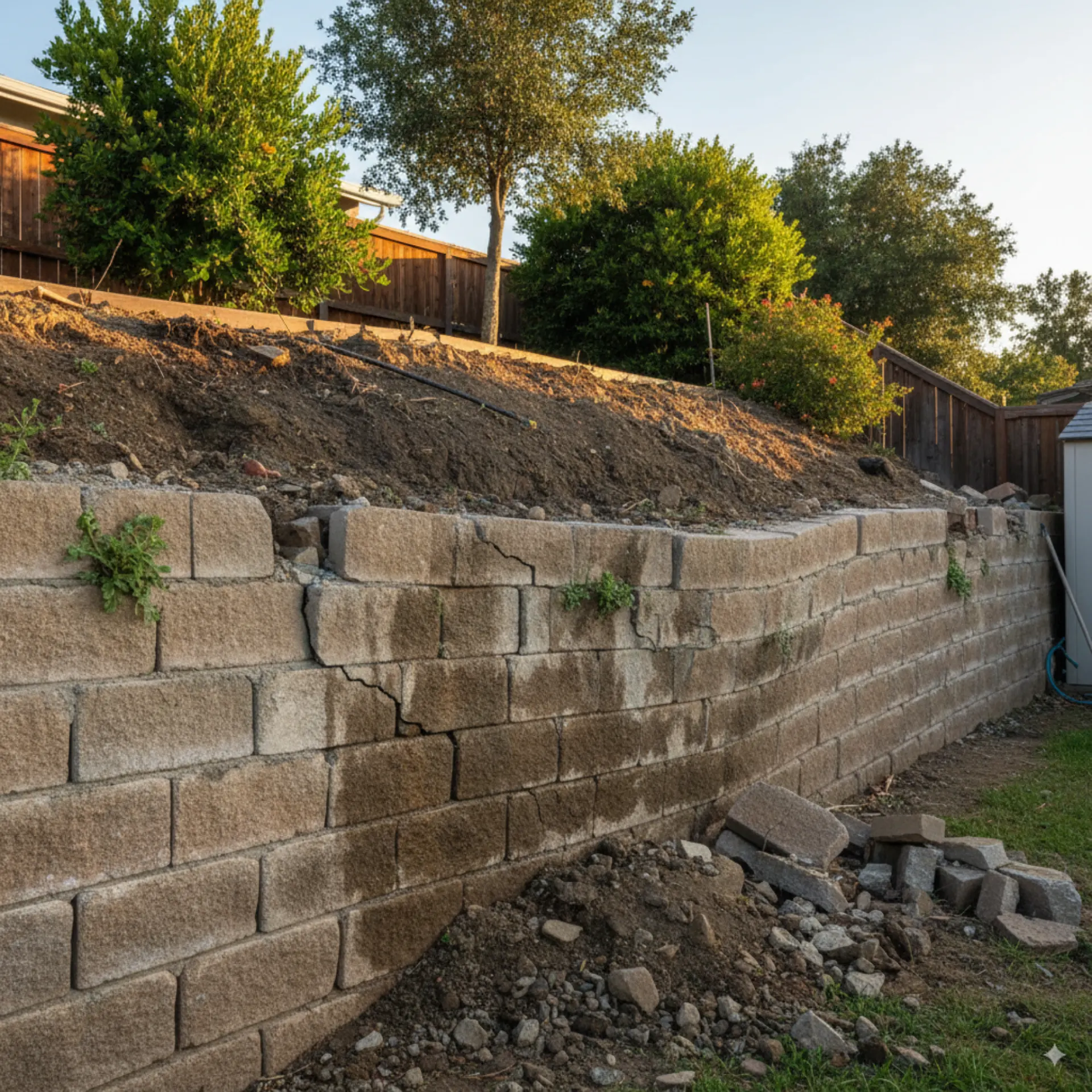
Can an existing leaning or cracked wall be repaired?
Sometimes. The right answer depends on the cause, wall system, foundation, reinforcement, soil, drainage, and degree of movement. An evaluation helps compare repair and replacement paths.
Do I need a soils report?
Many retaining-wall projects need geotechnical design parameters or recommendations. We review available information and identify what the wall design requires.
Why does drainage matter?
Water can add pressure, soften supporting soils, and contribute to movement. Drainage must be coordinated with the wall design and overall site water management.
Can you coordinate with my landscape designer or contractor?
Yes. We can coordinate wall location, finishes, site constraints, and structural details with the broader project team.
What property information can affect the wall location?
A survey, property lines, easements, neighboring improvements, slope geometry, utilities, and access can all affect the available options. Structural drawings do not establish legal boundaries, so survey or civil input may be needed.